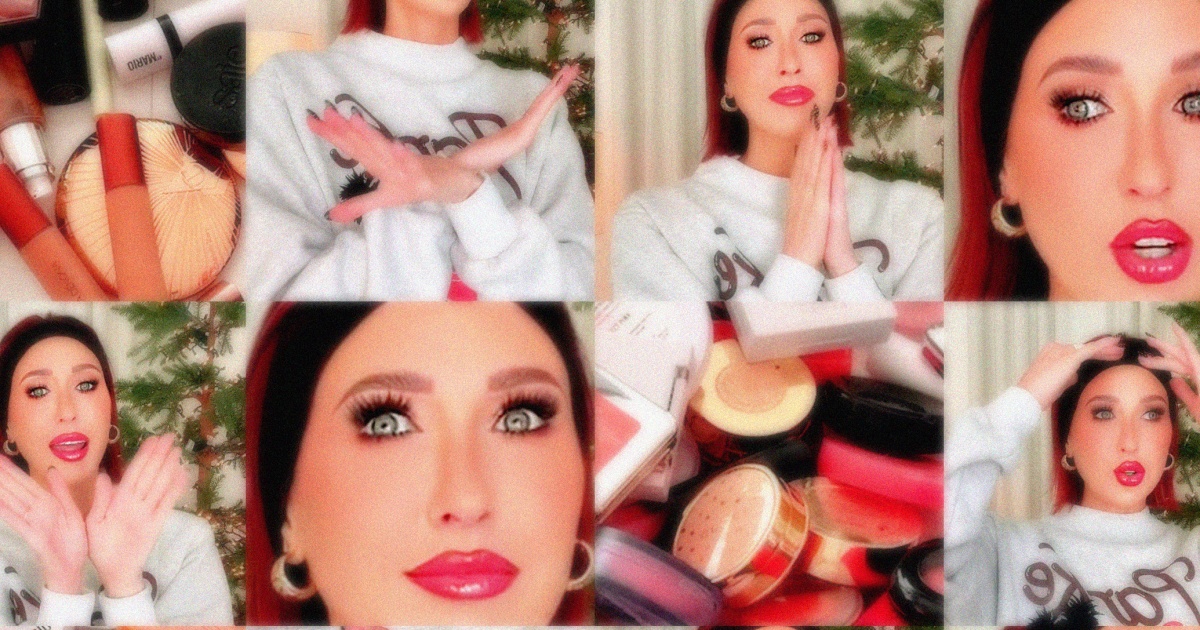
Beauty and fashion influencer Jaclyn Hill posed a question this month to her 1.2 million TikTok followers about something she said may be “a little controversial”: Why was she getting fewer views on her videos?
“We are in such a weird place on social media as content creators where I am, like, fighting … to connect with my followers,” Hill said in the Dec. 3 video. “When you have a million followers but you’re getting 30,000 views, this is just not the way it used to be.”
Hill, 35 — whose luxury hauls and makeup tutorials on YouTube, Instagram and TikTok over the past 14 years have helped define influencer commerce culture — candidly asked her “girls” for feedback, all while suggesting she was being “punished and penalized” by the app for not posting constantly.
Instead of support, followers slammed Hill for being “out of touch.”
“We’re tired of watching influencers rub their wealth in our faces,” a user commented. “The disconnect is crazy,” another wrote.
While Hill’s video, which has amassed over 3 million views, took issue with fickle algorithms and shadow banning, it inadvertently sparked a broader conversation about whether the type of influencer content that cemented her career no longer resonates with Americans struggling with an unstable economy and rising grocery and housing costs.
“People are over the overconsumption,” said Jessica Maddox, associate professor of media studies at the University of Georgia.
Hill did not respond to a request for comment.
Product ‘fatigue’ and economic strains
The conversation around influencer fatigue has been bubbling online for years as users pivot away from “Get Ready With Me” videos and lavish brand-trip vlogs and even away from “de-influencing,” a trend focused on not buying products or offering cheaper “dupes” to luxury items.
“De-influencing” became popular as a way to promote a more affordable way to stay on trend with influencers, but, Maddox said she’s seeing a further fatigue with even the “dupe” route — people online just don’t want to consume anymore.
Maddox said brands have perfected the road map to commodify influencers, prompting haul videos and promotional content to become more polished and less like the “girl next door” influencer videos that drew many users in.
“I think people miss the silliness,” she said. “I think people are over this need for perfection and constantly peddling products and luxury.”
One reason? Nostalgia for an older iteration of the internet.
But the larger issue centers on the economy, particularly its negative state in 2025. While influencing has “become a career with skill and with major economic impact,” Maddox said, it’s turning increasingly less relatable to those who consume the content, as evidenced by the dialogue between Hill and her viewers, as people struggle to make ends meet.
“This has moved from ‘Oh, I used to be able to relate to these influencers and creators because I thought they were authentic and I thought they were like me,’ but now they’re living these glamorous lifestyles that I personally can’t afford, and everything feels so corporate and professional and almost, like, cold now as opposed to the warmth we used to see among creators and influencers,” Maddox said.
Hill’s Dec. 3 video has amassed nearly 70,000 likes and 11,400 comments within weeks as users suggested it might be time for her to shift content gears and “adjust to the current climate.”
“People aren’t interested in watching someone spend thousands on a haul or decorate a million-dollar home for Thanksgiving,” a user wrote.
Another TikTok user even went so far as to make a reply video, pointing out that Hill’s content showcasing her wealth is why her followers are no longer connecting with her videos.
“Look, Jaclyn, you’re rich and you won, but I’m sorry if people don’t want to be drowned in overconsumption by influencers when they can’t afford groceries or housing,” TikTok user Daadi said in a video that has gotten 2.8 million views.
And it’s that stark juxtaposition between the haves and the have-nots in 2025 that aggravates the situation — and dictates online trends.
“When people are happy, when the economy is doing well, we like to ‘elevate our stature’ [by] hanging out with influencers, being a part of that culture,” said Peter Shankman, social media and marketing expert, author and entrepreneur.
“But when stuff starts to go down,” he said, “the influencers are begging for the same thing as us, but it’s not the same thing as us,” because your average viewer is just trying to find the money to buy dinner.
Looming consumer-driven social media shift
For Maddox, the controversy surrounding Hill is a harbinger for social media content.
“I actually don’t think at the end of the day any of this is about Jaclyn,” Maddox said. “People online do become these punching bags where it’s almost not even about the content they’re saying, but people kind of see the issues associated with the content” — in this case, issues with influencer culture, finances and the economy.
Hill took the comments in stride and the next day posted a follow-up video telling her followers that she had heard them: “You’re sick of the ‘influencer-era’… sick of the luxury,” she said.
She then asked her followers what it is they want to see from her content.
“I started this 14 years ago when I was literally on food stamps, broke as hell. I had no clue that you could make a dime doing social media. I genuinely started it for the love of it,” Hill said.
“The only reason I’m still here is for you guys, for the community. If you’re not enjoying what you’re seeing, I 100% want to know. I want to shift gears,” she added.
Maddox said she sees a shift in social media based on what consumers want to see, which she said includes relatability and ordinary people but also information and opportunities to learn something new. People miss the “girl next door” influencer, she added.
“It was not as perfect [or] commodified or TikTok wasn’t constantly trying to sell you something,” she said.
Such is the plague of being a content creator in 2025: The bigger and more successful creators become, the more polished their content gets with the introduction of brand deals — even when audiences want something else.
“It’s almost like they want the next crop, the next class of influencers,” so viewers can “go back to finding somebody with a smaller following, the relatable friend next door that they can plug into,” Maddox said.
She added: “But then the cycle is just going to repeat.”

Rebecca Cohen is a breaking news reporter for NBC News Digital.