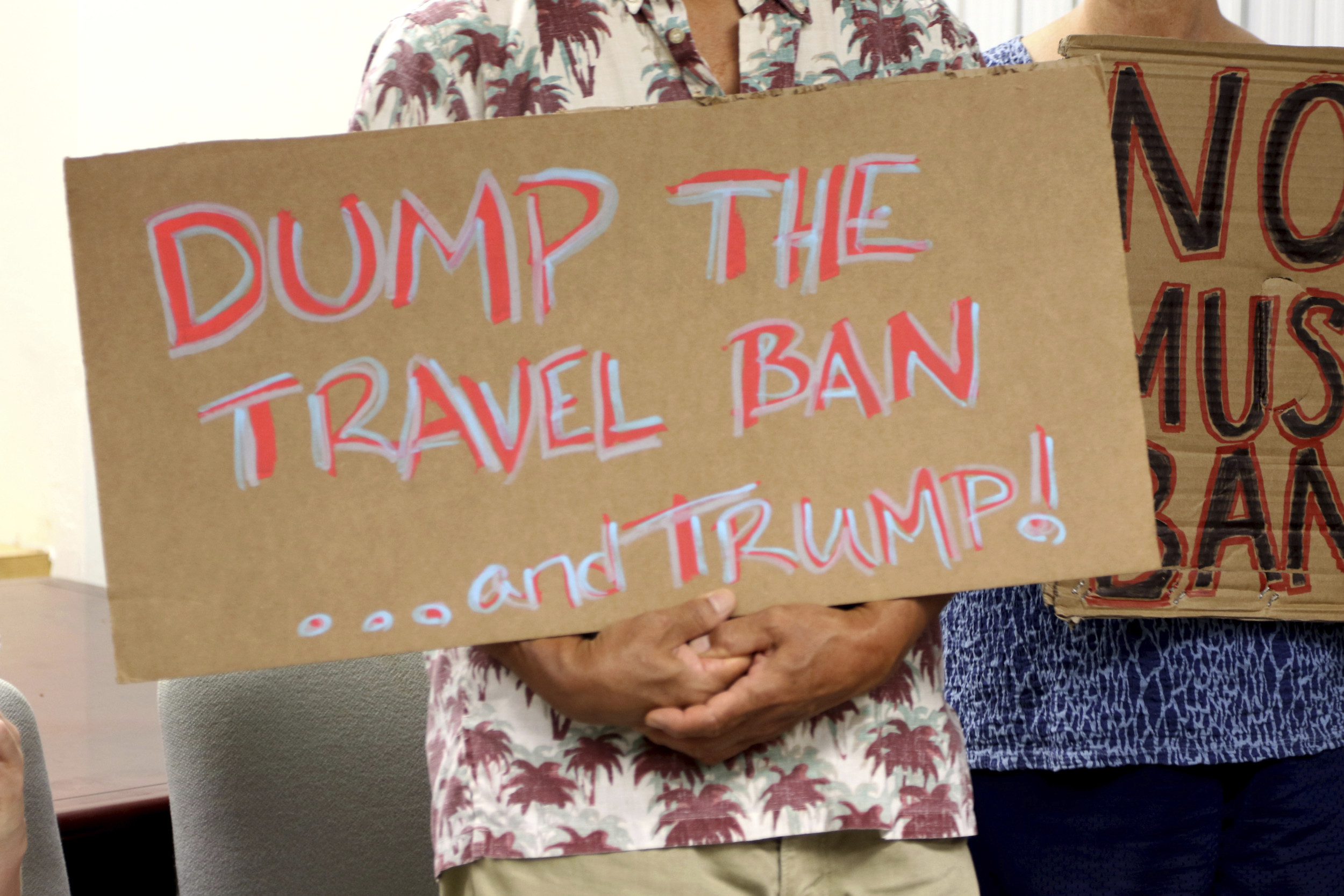
President Donald Trump issued an order on Wednesday banning travel from 12 countries and implementing partial restrictions on people from an additional seven.
The countries impacted by the order have started responding, with Venezuela’s Interior Minister Diosdado Cabello accusing the Trump administration of being “supremacists.”
But Somalia’s ambassador to the U.S. said the country remained “ready to engage in dialogue.”

AP
The Context
Trump announced on Wednesday that travel will be fully restricted for people from 12 nations: Afghanistan, Burma, Chad, Republic of the Congo, Equatorial Guinea, Eritrea, Haiti, Iran, Libya, Somalia, Sudan and Yemen.
He added that people from Burundi, Cuba, Laos, Sierra Leone, Togo, Turkmenistan and Venezuela will face partial restrictions.
Trump said the move is to “protect the nation from foreign terrorist and other national security and public safety threats.” He cited the recent attack in Boulder, Colorado, targeting a group advocating for the release of Israeli hostages still being held by Hamas.
Egyptian national Mohamed Sabry Soliman, 45, is facing attempted murder and federal hate crime charges related to the attack.
What To Know
Somalia
In its order, the White House said: “Somalia stands apart from other countries in the degree to which its government lacks command and control of its territory… The U.S. Government has identified Somalia as a terrorist safe haven.”
Somali ambassador to the U.S., Dahir Hassan Abdi, said in response: “Somalia values its longstanding relationship with the United States and stands ready to engage in dialogue to address the concerns raised.”
Venezuela
The White House said that Venezuela “does not have appropriate screening and vetting measures” and it “has historically refused to accept back its removable nationals.”
The country’s Interior Minister Diosdado Cabello hit back, accusing the Trump administration of “fascism.”
“Being in the United States is a great risk for anyone, not just for Venezuelans,” he said. “The people who govern the United States are bad people – it’s fascism, they are supremacists who think they own the world and persecute our people for no reason.”
statista
What People Are Saying
Trump said in a video address: “The recent terror attack in Boulder, Colorado, has underscored the extreme dangers posed to our country, by the entry of foreign nationals who are not properly vetted, as well as those who come here as temporary visitors and overstay their visas. We don’t want them.”
The Afghan-American Foundation said in a statement: “This new travel ban doesn’t just block visas — it blocks families, breaks promises, and betrays those who stood with the U.S. in Afghanistan. You can’t say Afghanistan is ‘safe’ and also label the Taliban terrorists.”
Renata Segura, director of the Latin America and Caribbean program at the International Crisis Group, said: “Haitians as a group have not exerted any kind of violence… To accuse [Haitians] in some way of being violent people is completely unrealistic, and also so, so terribly unfair for a country that is going through the crisis that Haiti is living right now.”
What Happens Next
Trump said that the list of countries is “subject to revision based on whether material improvements are made.” He added that further countries could be added “as threats emerge around the world.”