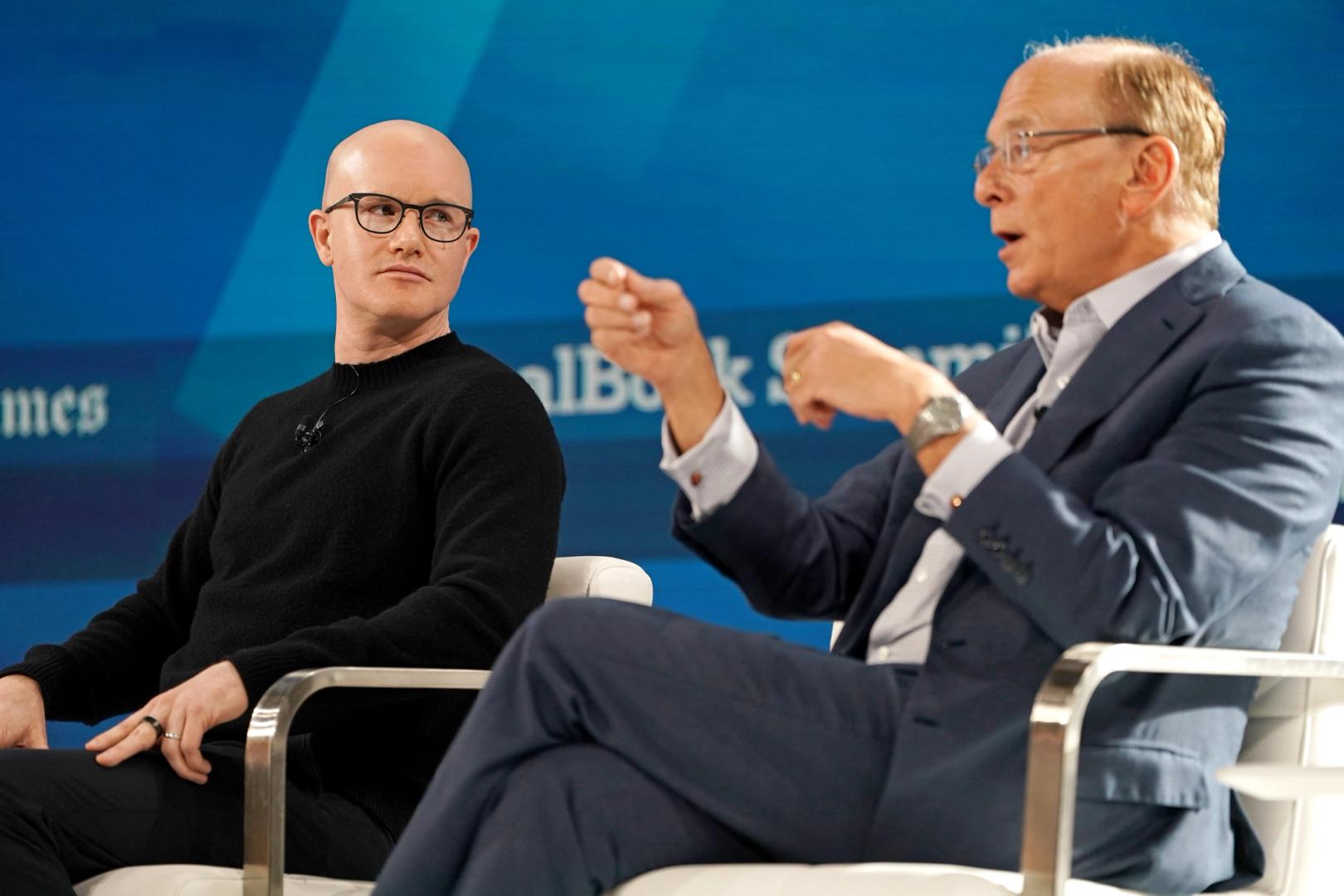
Brian Armstrong returns from World Economic Forum with message: traditional finance is taking crypto seriously
Jan 24, 2026, 7:22 p.m.
During his trip to Davos for the World Economic Forum, Coinbase CEO Brian Armstrong shared that a top executive at one of the world’s 10 largest banks told him that crypto is now their “number one priority” — and that they view it as “existential.”
Armstrong’s post, shared on X, highlighted a shift in how legacy financial institutions are engaging with crypto. The remark underscores the growing urgency among traditional banks to adapt to crypto infrastructure, particularly as global regulators move closer to establishing clearer rules for digital assets.
Just wrapped up our week in Davos. I don’t love wearing a suit every day, but sometimes it has to be done!
Davos is a unique place – world leaders and CEOs (and lots of crypto companies!) all come together in a small mountain town in Switzerland for a few days. It’s a productive… pic.twitter.com/0lO5TqRhkL
— Brian Armstrong (@brian_armstrong) January 24, 2026
Armstrong didn’t name the bank or executive, but said that many financial leaders he met during the weeklong event weren’t just open to crypto — they were actively seeking ways to get in. “Most of them are actually very pro crypto and are leaning into it as an opportunity,” he wrote.
For banks that rely on legacy payment rails, crypto represents both a challenge and an opportunity.
Read more: Bank of America CEO says stablecoins could drain trillions in bank deposits
Tokenization push
As stablecoins and tokenized assets gain momentum, the threat of disintermediation grows. It’s possible that a global asset manager or fintech firm could someday bypass traditional banks entirely by offering direct access to tokenized securities or stablecoin-based transfers — moving value instantly, without clearing delays or middlemen (a core pillar of crypto).
Armstrong said tokenization was one of the most discussed trends at Davos, expanding beyond stablecoins into equities, credit, and other financial products.
He pointed to the estimated 4 billion “unbrokered” adults worldwide who lack access to high-quality investments. Tokenization, he argued, could help close that gap.
“Expect some major progress here in 2026,” he added.
Regulation CLARITY
The Coinbase CEO also noted that political support for crypto in the U.S. appears to be strengthening.
He cited the Trump administration’s push for crypto-focused legislation, such as the CLARITY Act, which aims to provide a regulatory framework for digital assets. Armstrong didn’t touch on his firm’s decision to withdraw support for the crypto market structure bill at the last minute, following which the hearing was delayed.
Read more: Here’s why Coinbase and other companies soured on the major crypto bill
Armstrong described the administration as “the most crypto-forward government in the world” and said the push for clear rules is essential to keeping the U.S. competitive as countries like China invest heavily in stablecoin infrastructure. A theme Donald Trump has also talked about during his speech at Davos.
AI and crypto
Armstrong also said that artificial intelligence (AI) and crypto were the two most-discussed technologies at Davos.
While in the capital markets, AI’s surge has taken the wind out of crypto, Armstrong stressed that the two are closely linked. AI agents, he said, will likely default to using stablecoins for payments, bypassing conventional identity checks and banking restrictions altogether.
The infra exists, and usage is rapidly growing,” he added.
The message from Armstrong’s Davos recap was clear: crypto isn’t a fringe experiment anymore. For at least some of the world’s biggest financial players, it’s now a strategic priority — and possibly a matter of survival.
Read more: Coinbase CEO Brian Armstrong spars with France’s Central Bank chief at Davos over yield and ‘bitcoin standard’
AI Disclaimer: Parts of this article were generated with the assistance from AI tools and reviewed by our editorial team to ensure accuracy and adherence to our standards. For more information, see CoinDesk’s full AI Policy.
More For You
KuCoin Hits Record Market Share as 2025 Volumes Outpace Crypto Market

KuCoin captured a record share of centralised exchange volume in 2025, with more than $1.25tn traded as its volumes grew faster than the wider crypto market.
What to know:
- KuCoin recorded over $1.25 trillion in total trading volume in 2025, equivalent to an average of roughly $114 billion per month, marking its strongest year on record.
- This performance translated into an all-time high share of centralised exchange volume, as KuCoin’s activity expanded faster than aggregate CEX volumes, which slowed during periods of lower market volatility.
- Spot and derivatives volumes were evenly split, each exceeding $500 billion for the year, signalling broad-based usage rather than reliance on a single product line.
- Altcoins accounted for the majority of trading activity, reinforcing KuCoin’s role as a primary liquidity venue beyond BTC and ETH at a time when majors saw more muted turnover.
- Even as overall crypto volumes softened mid-year, KuCoin maintained elevated baseline activity, indicating structurally higher user engagement rather than short-lived volume spikes.
More For You
How the ultra-wealthy are using bitcoin to fund their yacht upgrades and Cannes trips

Cometh founder Jerome de Tychey is applying DeFi lending and borrowing on platforms like Aave, Morpho, and Uniswap to structures that help the ultra-wealthy secure loans against their massive crypto fortunes.
What to know:
- Wealthy investors who hold much of their fortune in crypto are increasingly turning to decentralized finance platforms to secure flexible credit lines without selling their digital assets.
- Firms like Cometh help family offices and other rich clients navigate complex DeFi tools, using assets such as bitcoin, ether and stablecoins to replicate traditional Lombard-style collateralized loans.
- DeFi loans can be faster and more anonymous than traditional bank credit but carry volatility and liquidation risks, and Cometh is also experimenting with applying DeFi strategies to traditional securities via ISIN-based tokenization.