
Please try another search

 Economy 3 hours ago (Nov 21, 2022 03:06AM ET)
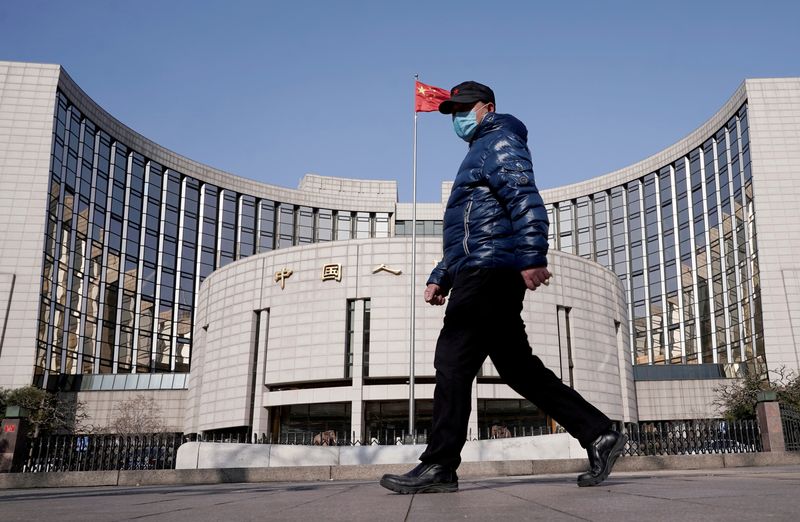
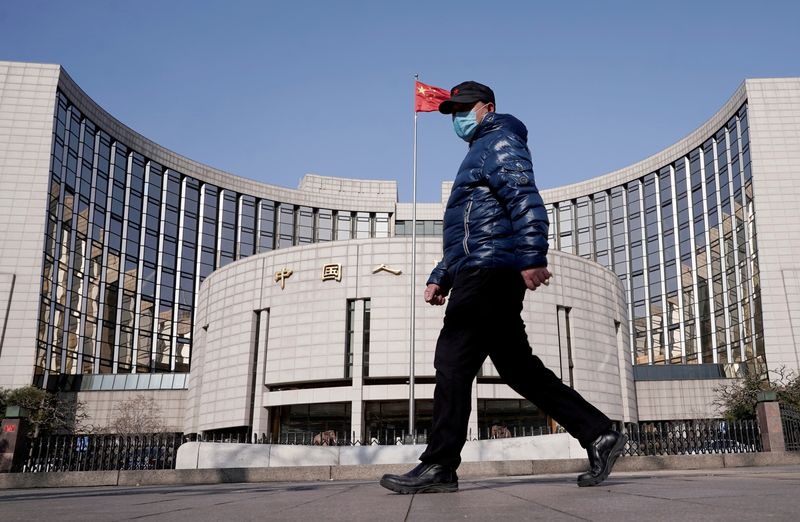
© Reuters. FILE PHOTO: The headquarters of the People’s Bank of China, the central bank, in Beijing, China, February 3, 2020. REUTERS/Jason Lee
BEIJING (Reuters) -China’s banks should step up credit support for the economy, including expanding medium to long-term loans to support infrastructure investment, the central bank and the banking and insurance regulator said on Monday.
Hurt by COVID-19 curbs and a sharp property downturn, China’s economy has been struggling to get back on its feet, even after a flurry of government measures this year to bolter domestic demand.
“We will make every effort to provide financial services to stabilise investment, promote consumption, and ensure people’s livelihood,” the People’s Bank of China and the China Banking and Insurance Regulatory Commission said in a statement after a meeting on bank credit.
“We will boost credit support to key areas, weak links, and sectors affected by the COVID-19, and make every effort to promote further economic recovery,” the statement said.
New bank lending in China tumbled more than expected in October from the previous month while broad credit growth slowed, as tought restrictions to curb COVID outbreaks and the property sector slump weighed on credit demand and confidence.
Commercial banks should expand medium – and long-term loans under a policy bank financing tool to help boost infrastructure investment, the statement said.
Under the scheme, authorities have allowed policy banks to issue 300 billion yuan ($41.86 billion) in bonds to boost capital of key infrastructure projects, and given policy banks 800 trillion yuan in new credit quotas to fund such projects.
National commercial banks, which include big state lenders, should take the lead in expanding credit to support for the economy, including for small firms, self-employed businesses and support credit demand of manufacturers and services firms.
China’s economy grew just 3% in January-September, and its full-year expansion is widely expected by analysts to be just over 3%, well below the “around 5.5%” full-year target for 2022.
Regarding the property sector, the authorities said they should stabilize lending to developers and construction firms, and also support reasonable demand for personal housing loans.
China’s real estate investment fell at the fastest pace in 32 months in October and overall new bank lending tumbled as strict COVID-19 restrictions and property woes weighed.
A recent slew of support measures, including loan repayment extensions, aimed at improving liquidity in the property sector has underpinned market sentiment.
($1=7.1665 renminbi)
Related Articles

PM Sunak says Britain will not pursue trade ties that rely on EU alignment
By Reuters – Nov 21, 2022
BIRMINGHAM, England (Reuters) -Britain will not pursue any trading relationship with the European Union that relies on the country aligning with the bloc’s laws, Prime Minister…

Greek economy to grow by 1.8% in 2023, rebound hurt by energy crisis
By Reuters – Nov 21, 2022
ATHENS (Reuters) -Greece’s economy should grow by 1.8% next year, at a slower pace than initially expected, as soaring energy costs and higher inflation are seen hurting tourism…

More small emerging market defaults ‘probable’ in 2023 – Fitch
By Reuters – Nov 21, 2022
JOHANNESBURG (Reuters) -More sovereign defaults are “probable” next year among small emerging market countries, ratings agency Fitch said in its 2023 outlook on Monday, citing a…