Published August 11, 2022
10 min read
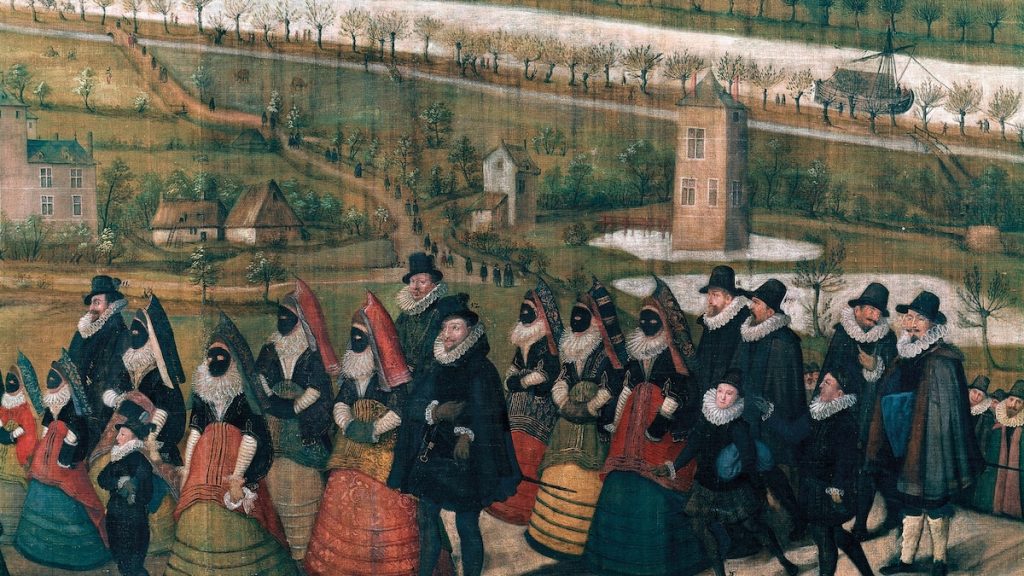
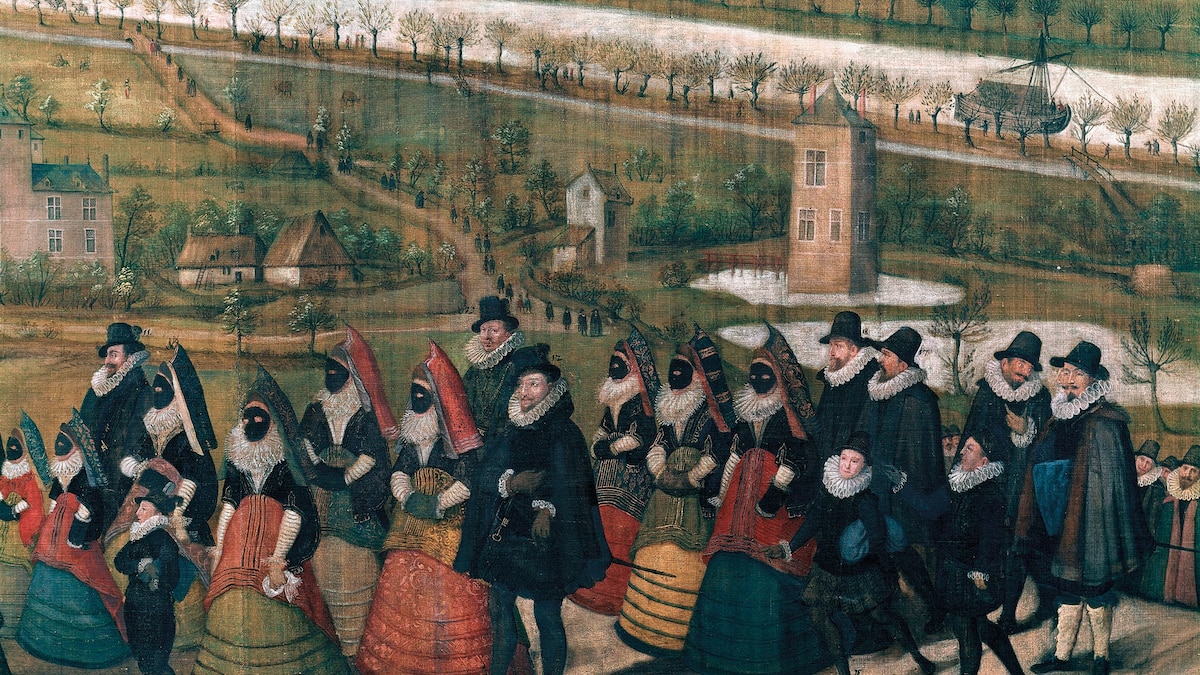
Masks have been used by many of the world’s cultures, from Asia to Africa, for many purposes, from the holy to the medical to the mundane. At times, mask wearing has been embraced as fashionable, much like in 16th-century Europe when wealthy women covered their faces and shielded their complexions from prying eyes and the hot sun.
(These modern artists are reimagining the face mask. Here’s how.)
At this time in history, pale skin was a sign of high status; sun-kissed skin suggested not health and vitality as it does now, but rather the necessity and drudgery of working outside. In order to achieve the lightest complexion, untouched by freckles and sunburn, upper-class women started wearing facial coverings to shield their faces from sun, wind, and dust. The appearance of smooth, pale skin was often further exaggerated with heavy white makeup.