

Cons
- Battery shifts around too much in the oversized interior pocket

In my extensive testing, I found that most of the cheapest heated vests on the market today just aren’t worth the money. To find something decent that I feel comfortable recommending, you’ll usually need to spend more than $100. Venustas’ Heated Vest is right in that sweet spot, with a good balance of tech, battery life, quality, and price.
Heated vests, especially puffer-style and higher pile fleece models, can be bulky, making them difficult to layer. I like the thinner design of this option, which allows it to layer easily under roomier winter jackets and outerwear. The carbon fiber heating elements are adjustable to one of three heat levels, and the zones are larger than most other heated vests I’ve tested, especially at this price point.
I’ve worn this heated vest (and Venustas’ heated fleece zip-up jacket) for the last few months. Between hiking in the Whites, wearing it around the house, and on my daily jogs, it’s held up very well. Where many of the vests I tested center the heat on a smaller targeted core area, the zones in this one feel more like large panels, so the heat is nice and even throughout my entire upper body. The overall quality is solid (especially at this price), and the battery life is on par with Venustas’ claims (around 10-12 hours max run time on Low).
My only minor gripe is the interior battery pocket feels a bit cheap. The battery fits very loosely inside, so it’s prone to shifting and moving around, which can dig into your waist and sides when moving from standing to sitting positions (e.g., if you’re wearing it on a bike or snowmobile). Despite that, this is still a great buy and our pick for the year’s best heated vest overall of 2025.
Read More: Best Space Heaters

Features at a Glance
| Battery Life | 10 hours (on low) |
| Heating Levels | 3 |
| Heating Element | Carbon fiber |
| Shell Fabric | Polyester |
| Care | Machine-washable |

Cons
- Look and feel is a step below the more premium options we tested
You often get what you pay for in the world of heated vests. But this option from Snow Leopard is a surprising exception. It ticks all my must-have boxes, including eight larger-than-average zones for evenly-distributed heat across the abdomen, back, shoulders, and even in the collar. The included 16,000-mAh battery is larger than average, delivering up to 10 hours of heat on a single charge. The polyester shell is tough enough for year-round use, even in light rain and snow. But the real win with this option is the price. Dollar for dollar, it’s the best value heated vest we’ve found, and the only model we’d recommend under $100.
Features at a Glance
| Battery Life | 10 hours (on low) |
| Heating Levels | 3 |
| Heating Elements | Carbon fiber |
| Shell Fabric | Polar fleece (polyester) |
| Care | Machine-washable |
Advertisement – Continue Reading Below

Cons
- Charges slower than most
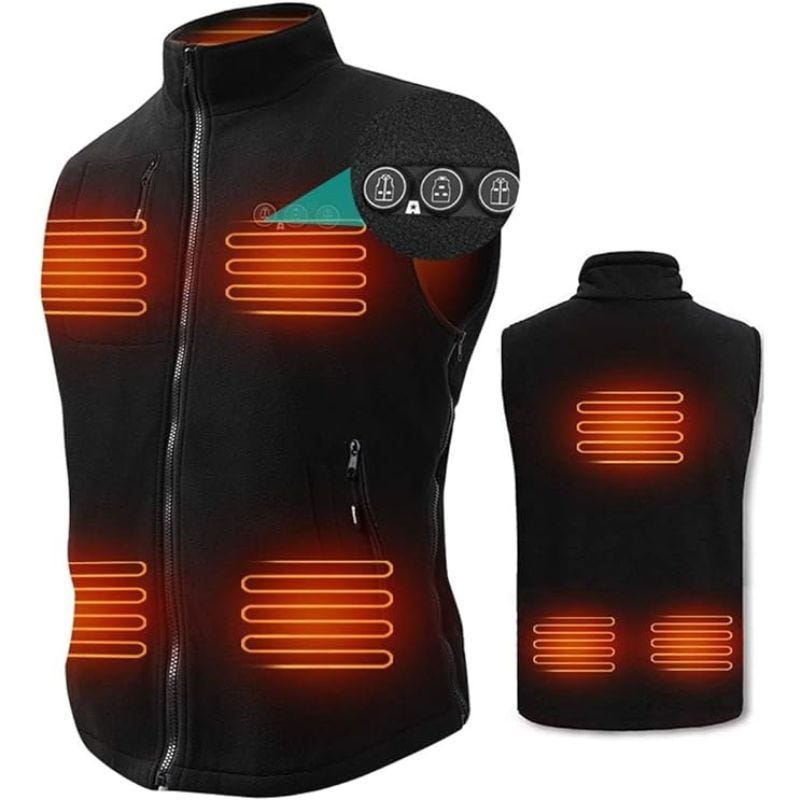
Most heated vests include at least three levels of temperature control. But the level you choose usually heats up every zone (and, therefore, the entire vest) equally. Arris’ Fleece Heated Vest has eight total zones, each with five adjustable heat levels. Plus, there are three separate buttons allowing you to activate/deactivate three zone groups (abdomen, chest, and neck/back) independently, making this the most adjustable and adaptable heated vest we’ve tested.
On the surface, this vest looks and feels like almost any other premium fleece vest. I found the fabric to be soft, comfy, and very warm, even without the heating elements turned on. But this model, too, features carbon fiber elements woven into the fabric that warm up in less than a minute, delivering nearly instant warmth. The included 7,500 mAh battery is good for up to 16 continuous hours on the lowest setting, so you’ll have all-day heat for whatever adventures you’re getting into.
Like the Snow Leopard option above, this heated vest is a great value, ticking all of my essential “must-have” feature boxes. My main gripe is that the battery takes longer to charge than most others—around six-seven hours with the included charger. However, that’s hardly a deal-breaker at this price.
| Battery Life | 16 hours (on low) |
| Heating Levels | 5 |
| Heating Element | Carbon fiber |
| Shell Fabric | Polyester |
| Care | Machine-washable |
Cons
- Runs small
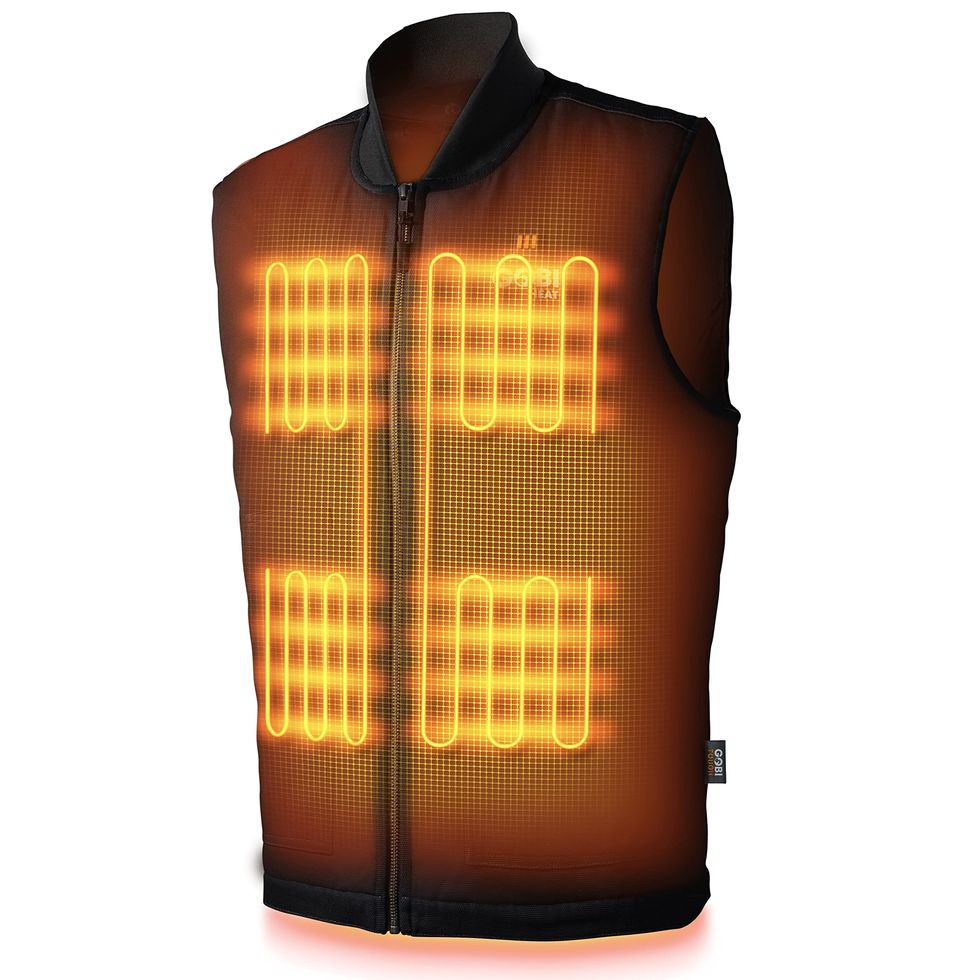
If you tend to go hard on your outerwear, I get it. But you want gear that stands up to years of abuse. Gobi’s Ibex Heated Work Vest looks and feels like a rugged work vest. It’s a functional aesthetic with a focus on durability over flash. The heavy-duty, 13.4-ounce duck cotton/nylon blend fabric is wind-, water-, and abrasion-resistant, making it the perfect shell for not just working but hiking, hunting, biking, or any other hardcore outdoor pursuits. Unlike some of the “crinkly” fabrics found in lesser vests, we like that the Ibex’s fabric is quiet. It’s also machine-washable, making it easy to clean.
Like most of our favorite options, this model is built with three adjustable heat levels. But it also has five heat zones: Two in the chest, two in the abdomen, and a large zone in the back, ensuring even all-over body heat. On low (around 113° F), the included battery pack will last about 9-10 hours—plenty for those extended outdoor excursions.
| Battery Life | 9 hours (on low) |
| Heating Levels | 3 |
| Heating Element | Metal |
| Shell Fabric | Cotton/nylon blend |
| Care | Machine-washable |
Advertisement – Continue Reading Below

Cons
- Sizes aren’t super accurate
Heated vests tend to be bulkier than traditional, non-heated alternatives, which is why I love Ororo’s Lightweight Heated Vest. It features a thinner, more tapered fit for maximum versatility when cold-weather layering under a puffy jacket or down parka. The four heating zones deliver reliable, consistent warmth in the mid-back, front pockets, and collar.
Despite its mid-range price tag, fit and finish is higher quality than I’d expect, with smooth-pulling zippers and a more elevated look than many of the value-minded alternatives I tested this year. I also appreciate the free shipping and free return shipping (via Amazon), so you can field test it for yourself with zero risk.
| Battery Life | 10 hours (on low) |
| Heating Levels | 3 |
| Heating Element | Metal |
| Shell Fabric | Nylon |
| Care | Machine-washable |
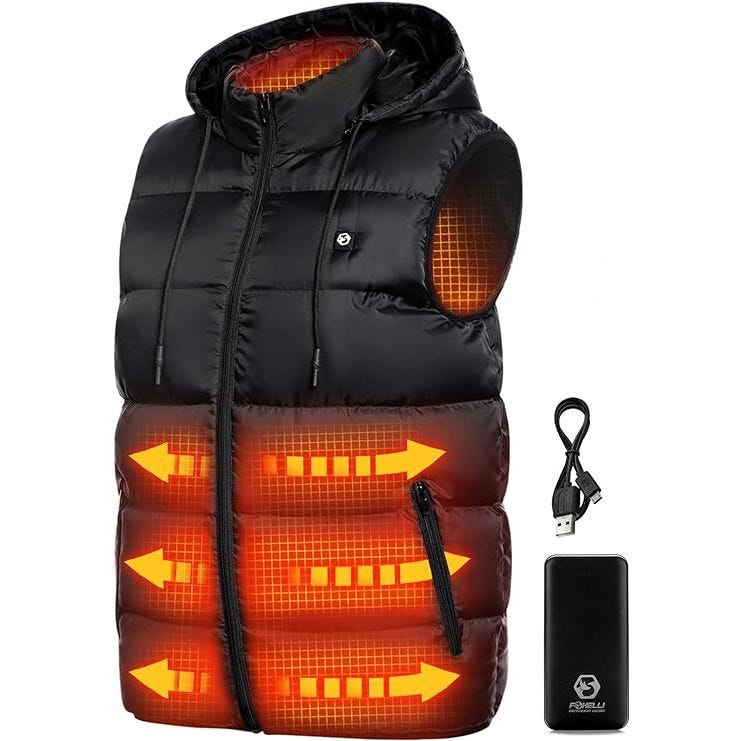
Foxelli is the exception that shows a good heated vest can be found for under $100. This rare, sub-$100, value-minded model checks all the boxes for what I look for, including three adjustable heat levels, carbon fiber heating elements, and a comfy all-around fit. Plus, it’s warm (even when switched off), thanks in part to the removable zip-off hood.
The puffer design offers just-right insulation that layers well under a jacket but keeps you warm enough without looking like the Michelin Man. It’s one of only two models in this guide with a hood for maximum versatility to dial in your preferred level of warmth. Remove it for those bluebird days, or zip it back on when the temperature drops. The built-in heating elements are well-spaced around the core, collar, and body, for even heat distribution. It only takes about three minutes to warm up from cold, and the included 10,000-mAh battery pack is good for up to eight hours of consistent heat on a single charge.
My one issue is that it doesn’t heat quite as well as others in our guide. I found that it performs best on at least the medium heat setting, but high is often required (which zaps the battery in around four hours). Still, for the price, I’m hard-pressed to find much to dislike about this model.
| Battery Life | Up to 8 hours (on low) |
| Heating Levels | 3 |
| Heating Element | Carbon fiber |
| Shell Fabric | Polyester |
| Care | Machine-washable |
Advertisement – Continue Reading Below

Cons
- Included 4,800-mAh battery is small
This latest option from Ororo stands out as one of the only genuine down heated vests on the market. The 800-fill power design (with RDS down) and detachable hood make it a legit winter-worthy layer on its own, even when it’s not running off the included USB-C battery pack. But the embedded carbon fiber heating elements weave through four independent zones—the collar, across the back, and at the front, including both hand pockets—for even, all-over warmth.
Like most in this guide, this heated vest includes three user-adjustable heat settings. Ororo claims the included battery is good for up to 10 hours of continuous runtime on low, plus it doubles as a portable power pack for your phone and other small electronics in a pinch.
Features at a Glance
| Battery Life | Up to 10 hours (on low) |
| Heating Levels | 3 |
| Heating Element | Carbon Fiber |
| Shell Fabric | 100% polyester |
| Care | Machine-washable |

Cons
- Among the priciest heated vests on the market
I’ve worn eWool’s latest Pro+ Heated Vest more than any other I’ve tested. It’s the only model that feels like a piece of designer clothing, with a slim, stretchy, almost tailored fit that’s nearly invisible as an added layer under a winter coat. The battery heats up faster and lasts longer (with the dual battery kit) than any other I’ve personally tested. Plus, the heating across the front, back, collar, and lumbar region is even and consistent on any of the three user-adjustable heat settings.
The only reason it didn’t make the cut for “Best Overall”? The price. It’s more than double that of every other heated vest I’ve worn, putting it out of reach for more budget-minded shoppers. Still, if money is no object, this is the heated vest to buy in 2025.
Features at a Glance
| Battery Life | Up to 7 hours (single battery) |
| Heating Levels | 3 |
| Heating Element | Carbon fiber |
| Shell Fabric | 94% polyester, 6% elastane |
| Care | Machine-washable |
Advertisement – Continue Reading Below

Do Heated Vests Actually Work?
The short answer is: Yes, absolutely. Even a decent budget-friendly model will keep you warmer than a non-heated option. The best heated vests offer a long battery life and excellent durability and are comfortable enough for all-day wear. With proper layering, I’ve found that heated vests are very effective in helping you keep warm in even the coldest winter weather.
Do You Need a Power Bank for a Heated Vest?
Yes, you will need a small portable power bank to operate your heated vest. Most heated vests include a basic battery, but I’ve found they’re typically too small to last a full day on medium or high settings. Many brands offer upgraded batteries with larger capacities (50% or more) that allow you to go all day, and I’ve found it’s almost always worth the splurge.
No matter what size battery you opt for, I recommend packing a spare. That way, you can always be charging the spare while keeping warm with your primary. Some heated vests are even built to hold more than one battery at a time.
Advertisement – Continue Reading Below
Is a Heated Vest Better Than a Heated Jacket?
Heated vests are best for cool-to-cold conditions like late fall and early/late winter. However, they are a bit more versatile for layering which can make them better than heated jackets for year-round wear. Heated jackets are better suited for the dead of winter when temperatures are likely to be much lower. For trekking in exceptionally cold conditions (think: Canada in February), I love layering a heated jacket over a heated vest. This combination has allowed me to comfortably hike, x-country ski, and explore in subzero conditions all day.
What Are the Disadvantages of Heated Vests?
The downside of heated vests—even the best heated vests—is that they’re often more expensive than their traditional, non-electric counterparts. Because they’re electric, they also require battery packs, which add extra weight to whatever gear load you’re already carrying. Maintenance and cleaning are more complicated, too, as you’ll need to be careful of the integrated wires. Most heated vests require hand washing or gentle machine washing and must be line-dried.
Advertisement – Continue Reading Below
Are Heated Vests Safe?
As with all electronics, quality matters. That’s especially true of heated gear, including apparel. Whether it’s heated vests, heated socks, or heated hiking boot inserts, the mechanics are the same: You’re placing a lithium battery-powered device that’s designed to heat up in a confined space that’s surrounded by fabric. If you’re not investing in high-quality gear from reputable manufacturers, you’re asking for trouble.
After testing all kinds of heated gear from a wide variety of brands, we’ve never personally had any safety- or injury-related issues. But I think it’s worth skipping the ultra-budget heated gear (including heated vests) purely out of an abundance of caution. In practical terms, I typically only consider heated vests that run north of $100 at an absolute minimum. I would also double-check third-party-verified reviews to see if previous buyers have noted any issues.

Mike Richard has traveled the world since 2008. He’s kayaked in Antarctica, tracked endangered African wild dogs in South Africa, and survived a near-miss great white shark attack in Mexico. His travel advice has appeared on the websites for Forbes, Travel + Leisure, CNET, and National Geographic. He loves the great outdoors and good bourbon, and (usually) calls Tulsa, Oklahoma home. Mike also enjoys speaking in the third person.
Ryan Brower is the Senior Gear and Commerce Editor at Men’s Health, where he tests the best products in outdoor gear and tech. Baseball, surfing, and camping occupied most of his time growing up.
He also trained in martial arts for 12 years and holds a third degree black belt. He has written about the outdoors for nearly two decades and was previously the Managing Editor, Content Performance at Gear Patrol. He is also a Certified Beer Server and previously covered the craft beer industry. Ryan currently lives on the water i